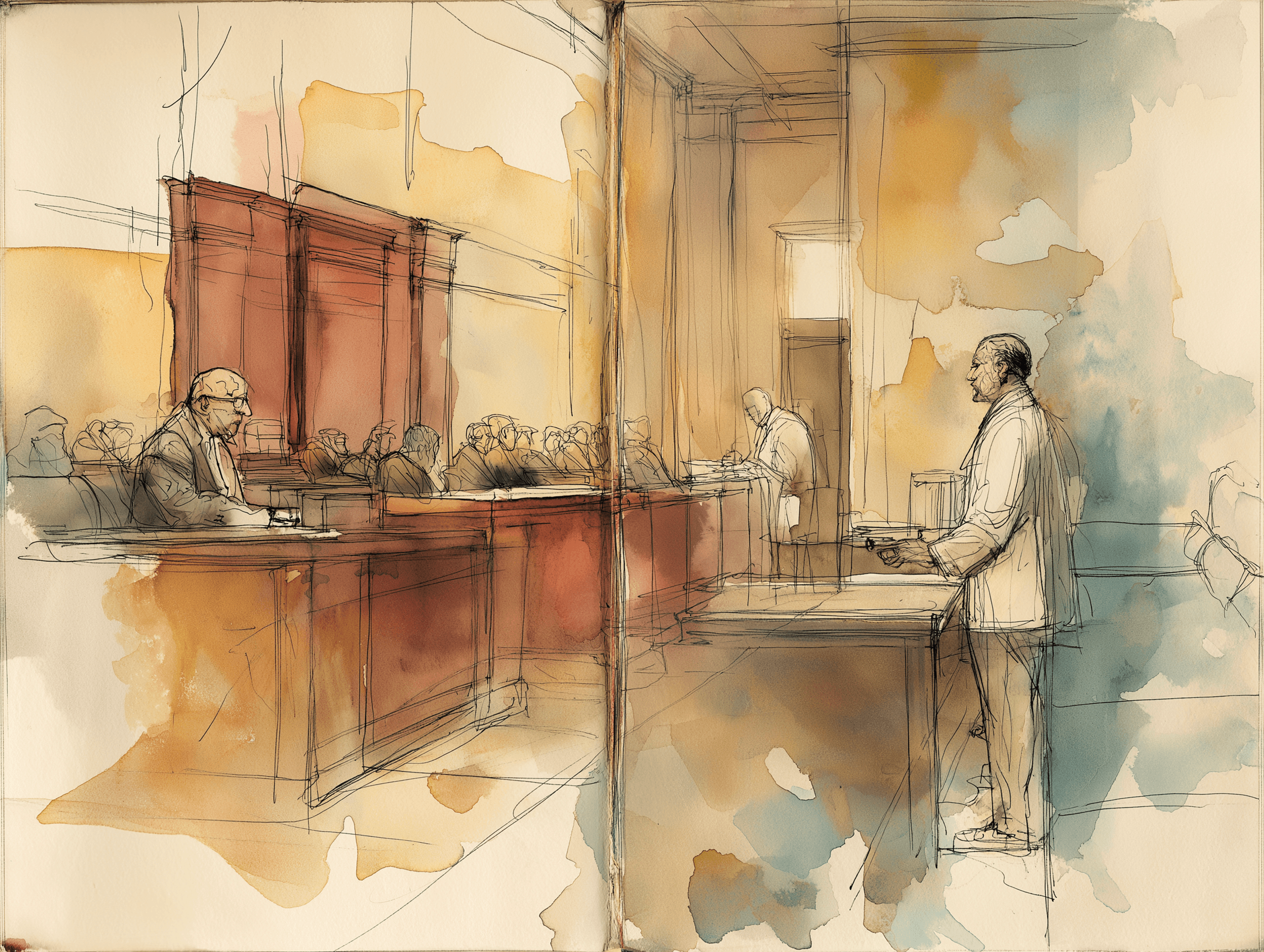
This analysis addresses federal constitutional law governing involuntary administration of antipsychotic medication to restore a criminal defendant’s competency to stand trial. It is the final entry in a three-part series: Part 1 covers treatment refusal in civil commitment (Rogers v. Okin, 634 F.2d 650 (1st Cir. 1980)); Part 2 covers involuntary administration in correctional settings (Washington v. Harper, 494 U.S. 210 (1990)). The Sell framework applies in federal proceedings and provides constitutional guidance for state jurisdictions; practitioners must also consult applicable state statutes, facility policies, and local court rules. Case citations are presented in reporter format in text for clinician traceability; scholarly sources follow APA author-date conventions.
The Sell four-factor test is the most stringent standard in the involuntary medication trilogy: Unlike Harper (correctional context, administrative review, no capacity finding required) or Rogers (civil context, substituted judgment), Sell requires a court to make four specific findings before involuntary administration may proceed solely to restore trial competency.
Rule of thumb: Before seeking a Sell order for trial competency, always determine whether involuntary administration can be justified on dangerousness or medical-necessity grounds (the Harper standard). If it can, the trial competency question need not be reached.
Qualifying instances “may be rare”: The Court expressly stated that cases meeting all four Sell factors will be uncommon. Forensic evaluators should expect that most involuntary administration orders will rest on dangerousness or safety-based justifications rather than competency restoration alone.
Side effects must be evaluated at the front end: The evaluator must opine on whether the proposed antipsychotic carries a cognitive, sedative, or extrapyramidal burden that would compromise the defendant’s ability to assist counsel at trial. Current evidence shows antipsychotics can impair working memory and processing speed even in healthy individuals (Osugo et al., 2025), making this inquiry clinically demanding. See the Legal Reasoning and Contemporary Literature Review sections below.
Documentation: A Sell evaluation must address all four factors: (1) importance of the governmental interest, including mitigating factors such as time already served; (2) likelihood of restoration and likelihood that adverse effects will not compromise trial participation; (3) necessity, including documentation that less restrictive options were considered and why they are inadequate; and (4) medical appropriateness of the specific drug and dose. See the Federal Clinical Checklist below.
State law may impose additional requirements: The Sell framework establishes a federal constitutional floor. Some states require judicial hearings with heightened procedural protections, limit the duration of medication orders, or impose additional substantive criteria. Practitioners should consult jurisdiction-specific authority.
CASE INFORMATION
Case Name: Sell v. United States
Citation: Sell v. United States, 539 U.S. 166 (2003)
Court: Supreme Court of the United States
Year: 2003
Jurisdiction: Federal
Domain: Competency Restoration; Autonomy
CASE CLASSIFICATION
Primary Legal Area: Involuntary Medication for Competency Restoration; Due Process
Secondary Issues: Trial Fairness; Side Effects of Antipsychotic Medication; Collateral Order Doctrine; Dangerousness; Medical Appropriateness; Less Restrictive Alternatives
Mental Health Relevance: This case establishes the most demanding constitutional standard for involuntary administration in the trilogy. Unlike Rogers (civil, capacity-centered) and Harper (correctional, reasonableness-centered), Sell requires a court to make individualized findings on four distinct factors before the government may forcibly medicate a defendant solely to restore trial competency. It reframes the forensic evaluator’s role: the expert must address not only clinical prognosis but also the medication’s likely impact on the defendant’s capacity to participate in trial proceedings.
PARTIES
Petitioner: Charles Thomas Sell, D.D.S. (criminal defendant, former dentist with long history of mental illness)
Respondent: United States of America
Key Stakeholders: American Psychological Association (amicus curiae, urging reversal); American Psychiatric Association et al. (amici curiae); American Civil Liberties Union of Eastern Missouri; National Association of Criminal Defense Lawyers; Rutherford Institute (amici curiae, urging reversal); Cognitive Liberty and Ethics (amicus curiae)
FORENSIC MENTAL HEALTH CASE LAW ANALYSIS
Definitions
Competency to stand trial (CST): The legal standard, derived from Dusky v. United States, 362 U.S. 402 (1960), requiring that a defendant possess a sufficient present ability to consult with counsel with a reasonable degree of rational understanding and a rational as well as factual understanding of the proceedings.
Competency restoration: The clinical process of treating a defendant found incompetent to stand trial with the goal of achieving sufficient improvement in mental functioning to meet the Dusky standard. In the Sell context, the government must show that the proposed antipsychotic is substantially likely to achieve this outcome. Importantly, symptom reduction alone does not equate to restoration; the defendant must regain functional competence to consult with counsel and comprehend proceedings.
Sell four-factor test: The constitutional framework requiring a court to find: (1) important governmental trial-related interests are at stake; (2) involuntary administration will meaningfully further those interests (substantially likely to restore competency; substantially unlikely to compromise the defendant’s capacity to assist counsel through adverse effects); (3) the proposed pharmacotherapy is necessary (less restrictive options are unlikely to achieve substantially the same results); and (4) the drug and dose are clinically indicated in light of the patient’s condition.
Harper-type grounds (series shorthand): Safety- or medical-interest justifications for involuntary administration recognized in correctional and related settings, including the dangerousness framework established in Washington v. Harper, 494 U.S. 210 (1990), and closely related doctrines. In this series, the term encompasses justifications based on dangerousness to self or others, grave disability (a cross-jurisdictional clinical-legal term; the federal regulation at 28 C.F.R. § 549.46 defines this as “extreme deterioration in personal functioning”), or the patient’s own medical interests, rather than trial competency. The Sell Court recommended that courts ordinarily resolve these dangerousness or medical-necessity grounds first before reaching the trial competency question.
Treatment decision-making capacity (TDMC): A decision-specific clinical determination of whether the patient can understand relevant information, appreciate its personal significance, reason about options and consequences, and communicate a stable choice. Although the Sell framework does not explicitly require a capacity finding as a separate factor, TDMC assessment remains best practice for documenting the ethical basis for involuntary treatment. See Part 1 (Rogers) for detailed TDMC guidance.
Collateral order doctrine: A narrow exception to the final judgment rule (28 U.S.C. § 1291) permitting interlocutory appeal of orders that (1) conclusively determine a disputed question, (2) resolve an important issue completely separate from the merits, and (3) are effectively unreviewable on appeal from final judgment. The Sell Court held that pretrial involuntary medication orders satisfy this test.
Controlling Law (Federal)
The Sell four-factor test derives from the Due Process Clause of the Fifth Amendment (federal proceedings) and the Fourteenth Amendment (state proceedings). It builds on two prior holdings: Washington v. Harper, 494 U.S. 210 (1990), which recognized the constitutionally protected liberty interest in refusing antipsychotic medication and established the framework for involuntary administration to dangerous prisoners; and Riggins v. Nevada, 504 U.S. 127 (1992), which held that compelled pharmacotherapy for a criminal defendant requires at minimum that the intervention be clinically indicated and, considering less restrictive options, essential for the defendant’s safety or the safety of others. Riggins also recognized that involuntary administration could render a trial unfair through cognitive and behavioral adverse effects.
In federal custody, 28 C.F.R. § 549.46 establishes Bureau of Prisons procedures for involuntary psychiatric medication via administrative hearing when, due to mental illness, an inmate is dangerous to self or others, poses a serious threat of property damage affecting institutional security or orderly operation, or is gravely disabled (manifested by extreme deterioration in personal functioning). For medication sought solely to restore competency to stand trial, § 549.46 provides that only a federal court may authorize involuntary administration. The Sell decision provides the constitutional overlay that any court order authorizing involuntary pharmacotherapy for competency restoration purposes must satisfy.
Why This Case Matters
This analysis is the final entry in a three-part series translating landmark involuntary medication cases into documentation, capacity evaluation, and testimony-ready practice points for clinicians. Part 1 (Rogers v. Okin) addressed the civil commitment context. Part 2 (Washington v. Harper) addressed the correctional context. This entry addresses the highest-stakes intersection: when the government seeks to compel antipsychotic administration solely to make a defendant competent to face criminal charges.
Sell matters in 2026 because competency restoration remains one of the fastest-growing areas of forensic mental health practice, with rising caseloads straining state and federal restoration systems. Recent research has advanced understanding of antipsychotic efficacy in competency restoration, the cognitive toll of antipsychotics that may affect the defendant’s ability to participate in trial, and the ethical tensions inherent in treating a patient to make prosecution possible. This entry integrates that evidence with the Sell framework to equip evaluators, treatment providers, and legal professionals with current, empirically grounded practice guidance.
Summary
The Supreme Court held that the Constitution permits the government to involuntarily administer antipsychotic drugs to a mentally ill criminal defendant to render the defendant competent to stand trial, but only in limited circumstances. The Court articulated a four-factor test requiring findings of: (1) important governmental trial-related interests; (2) substantial likelihood that pharmacotherapy will restore competency without adverse effects that materially undermine the defendant’s ability to participate in trial; (3) necessity, meaning less restrictive options are unlikely to achieve substantially the same results; and (4) medical appropriateness. The Court vacated the Eighth Circuit’s judgment because the lower courts had authorized involuntary administration for trial competency after finding the defendant was not dangerous, yet the record was developed primarily around dangerousness rather than the distinct trial-participation considerations that the Sell standard requires. The Court emphasized that qualifying instances “may be rare” and that courts should ordinarily determine whether dangerousness or medical-necessity grounds justify involuntary administration before reaching the trial competency question.
FACTUAL BACKGROUND
Clinical Facts
Charles Sell was a former practicing dentist with a long and well-documented history of mental illness spanning more than two decades.
In September 1982, after telling doctors that gold fillings had been contaminated by communists, Sell was hospitalized, treated with antipsychotic medication, and subsequently discharged.
In June 1984, Sell called police to report that a leopard was boarding a bus outside his office and asked the police to shoot it.
On various occasions, Sell complained that public officials, including a state governor and a police chief, were trying to kill him.
In April 1997, Sell told law enforcement that he “spoke to God last night” and that “God told me every [FBI] person I kill, a soul will be saved.”
After initial charges in May 1997, a Magistrate Judge ordered a psychiatric examination and found Sell “currently competent” but noted he might experience “a psychotic episode” in the future. Sell was released on bail.
At a subsequent bail revocation hearing in early 1998, Sell’s behavior was described as “totally out of control,” involving “screaming and shouting,” “personal insults,” “racial epithets,” and “spitting in the judge’s face.” A psychiatrist reported Sell could not sleep because he expected the FBI to “come busting through the door” and concluded Sell’s condition had worsened.
The Medical Center for Federal Prisoners at Springfield, Missouri, evaluated Sell and found him mentally incompetent to stand trial. Staff recommended antipsychotic medication, which Sell refused.
A reviewing psychiatrist diagnosed delusional disorder with a possible underlying schizophrenic process, noting Sell’s persecutory beliefs that government officials, courts, the FBI, and federal agents were conspiring against him.
An outside medical expert opined that Sell suffered from a delusional disorder in which “medication rarely helps.” Medical Center staff disagreed. Sell and laypersons who knew him asserted he did not suffer from a serious mental illness.
After the administrative proceedings, in July 1999, Sell approached a Medical Center nurse, suggested he was in love with her, and when told his behavior was inappropriate, stated “I can’t help it.” Medical Center doctors testified that this boundary-breaching conduct, given Sell’s diagnosis and behavioral history, indicated he posed a safety risk even within the institution.
Legal Facts
In May 1997, Sell was charged with making materially false, fictitious, or fraudulent statements or representations in connection with a health care benefit program (18 U.S.C. § 1035(a)(2)).
A superseding indictment charged Sell and his wife with 56 counts of mail fraud, 6 counts of Medicaid fraud, and 1 count of money laundering.
In April 1998, a new indictment charged Sell with attempting to murder the FBI agent who had arrested him and a former employee who planned to testify against him. The attempted murder and fraud cases were joined for trial.
In early 1999, Sell requested reconsideration of his competence to stand trial. The Magistrate Judge found Sell mentally incompetent and ordered hospitalization at the Medical Center for up to four months to determine whether there was a substantial probability that Sell would attain competency to proceed to trial.
Medical Center staff sought permission to administer antipsychotic medication involuntarily. The administrative and judicial proceedings that followed are the subject of this case.
PROCEDURAL HISTORY
Administrative Review (Medical Center): In June 1999, a reviewing psychiatrist at the Medical Center authorized involuntary administration on dual grounds: (1) Sell was “mentally ill and dangerous, and medication is necessary to treat the mental illness”; and (2) pharmacotherapy was needed so Sell would “become competent for trial.” The reviewing psychiatrist noted Sell was “dangerous based on threats and delusions if outside, but not necessarily inside prison” and was “[a]ble to function” in the open prison population. A Bureau of Prisons official upheld this determination on administrative appeal.
Magistrate Judge: In August 2000, the Magistrate Judge found that the government had made “a very substantial and strong showing that Dr. Sell is a danger to himself and others at the institution in which he is currently incarcerated,” that antipsychotic pharmacotherapy was “the only way to render him less dangerous,” that newer drugs would ameliorate serious adverse effects, and that “there is a substantial probability” the drugs would return Sell to competency. The Magistrate issued an order authorizing involuntary administration, stayed pending appeal.
District Court: In April 2001, the District Court found the Magistrate’s dangerousness determination “clearly erroneous,” limiting its finding to Sell’s “dangerousness to himself and to those around him in his institutional context.” Nonetheless, the court affirmed the involuntary administration order on trial competency grounds alone, finding that antipsychotic drugs were clinically indicated, represented “the only viable hope of rendering the defendant competent to stand trial,” and served the government’s “compelling interest in obtaining an adjudication of defendant’s guilt or innocence.” The court stated it was “premature” to consider whether medication adverse effects might prejudice Sell’s trial defense.
Court of Appeals (Eighth Circuit): In March 2002, a divided panel affirmed. The majority agreed the evidence did not support a finding that Sell posed a danger to himself or others at the Medical Center, but affirmed the involuntary administration order on trial competency grounds. The majority found the government had “an essential interest in bringing a defendant to trial,” that there were “no less intrusive means,” and that the proposed pharmacotherapy was “medically appropriate for Sell.” One judge dissented, arguing the fraud and money laundering charges were “not serious enough to warrant the forced medication of the defendant.”
Supreme Court: The Court granted certiorari and vacated the Eighth Circuit’s judgment. Justice Breyer delivered the opinion for a 6–3 majority (joined by Rehnquist, C.J., and Stevens, Kennedy, Souter, and Ginsburg, JJ.). Justice Scalia dissented (joined by O’Connor and Thomas, JJ.), arguing the Court lacked jurisdiction because the pretrial medication order was reviewable on appeal from final judgment under Riggins v. Nevada.
LEGAL ISSUE(S)
Threshold Jurisdictional Issue: Whether a pretrial order authorizing involuntary administration of antipsychotic medication is an appealable “collateral order” under 28 U.S.C. § 1291, or whether the defendant must wait until after conviction and sentence to obtain appellate review.
Primary Issue
Whether the Constitution permits the government to administer antipsychotic drugs involuntarily to a mentally ill criminal defendant in order to render that defendant competent to stand trial for serious but nonviolent crimes.
Secondary Issues
What factors must a court evaluate before authorizing involuntary administration solely for competency restoration purposes?
Should courts ordinarily determine whether compelled pharmacotherapy is justified on dangerousness or medical-necessity grounds (Harper-type) before reaching the trial competency question?
What role do medication adverse effects play in evaluating whether involuntary treatment is constitutionally permissible for competency restoration?
HOLDING
Primary Holding
The Constitution allows the government to administer antipsychotic drugs involuntarily to a mentally ill criminal defendant to render the defendant competent to stand trial, but only upon satisfaction of four conditions. First, a court must find that important governmental trial-related interests are at stake. Second, the court must conclude that involuntary administration will meaningfully further those concomitant state interests: the proposed pharmacotherapy must be substantially likely to render the defendant competent to stand trial and, at the same time, substantially unlikely to produce adverse effects that will interfere with the defendant’s ability to assist counsel in conducting a trial defense, thereby rendering the trial unfair. Third, the court must conclude that involuntary administration is necessary to further those interests, meaning that any less restrictive options are unlikely to achieve substantially the same results. Fourth, the court must conclude that the drugs are clinically indicated, that is, in the patient’s best medical interest in light of his medical condition. The Court stated that instances satisfying this standard “may be rare.”
Secondary Holdings
Collateral Order Doctrine: The pretrial involuntary medication order was an appealable collateral order under 28 U.S.C. § 1291 because it (1) conclusively determined the disputed question of Sell’s right to avoid compelled pharmacotherapy, (2) resolved an important constitutional issue completely separate from the merits of the criminal charges, and (3) was effectively unreviewable on appeal from final judgment because, by the time of trial, Sell would have undergone the very involuntary administration that constituted the harm he sought to avoid.
Dangerousness and Medical-Necessity Grounds First: Courts should ordinarily determine whether involuntary administration can be justified on Harper-type grounds (as used in this series: dangerousness to self or others, grave disability, or the patient’s own medical interests) before turning to the trial competency question. This inquiry is typically “more objective and manageable” than the trial competency inquiry, and if pharmacotherapy is authorized on these alternative grounds, the need to consider authorization on trial competency grounds “will likely disappear.”
Application to This Case: The existing orders authorizing involuntary administration could not stand because: (a) the Magistrate did not find the proposed pharmacotherapy legally justified on trial competency grounds alone; (b) the record was developed primarily around dangerousness rather than trial-specific considerations such as adverse effects and risks to defense participation; and (c) the lower courts did not consider that Sell had already been confined for a lengthy period of time and that his refusal to take medication might result in further lengthy confinement, factors that moderate the governmental interest in prosecution.
Practice note: This holding was not disturbed on remand. See Subsequent Development below.
LEGAL REASONING
Controlling Legal Principle
The Court drew on two prior precedents to construct the four-factor test. In Washington v. Harper, 494 U.S. 210 (1990), the Court recognized that an individual has a “constitutionally protected liberty interest” of “significant” importance in “avoiding the unwanted administration of antipsychotic drugs.” In Riggins v. Nevada, 504 U.S. 127 (1992), the Court reiterated that liberty interest and suggested that compelled pharmacotherapy to restore trial competency could be constitutionally permissible if the state demonstrated that the intervention was clinically indicated and, considering less restrictive options, essential for the defendant’s safety or the safety of others, or that it “could not obtain an adjudication of [the defendant’s] guilt or innocence by using less intrusive means.” The Court synthesized these authorities into a unified standard applicable when the sole justification for involuntary administration is competency restoration.
Application to Facts
Factor 1: Important Governmental Interests
The Court acknowledged that the government’s interest in bringing to trial an individual accused of a serious crime is important, whether the offense is a serious crime against the person or a serious crime against property, because “the Government seeks to protect through application of the criminal law the basic human need for security.” However, the Court required courts to evaluate this interest in light of the individual case. Special circumstances may diminish the importance of prosecution: the defendant’s failure to take drugs voluntarily may result in lengthy confinement in an institution for the mentally ill, which would reduce the risks that ordinarily attach to freeing without punishment one who has committed a serious crime. Similarly, a defendant who has already been confined for a significant period would receive credit toward any sentence ultimately imposed (18 U.S.C. § 3585(b)), further moderating the governmental interest.
Practice point: The governmental interest is strongest for serious offenses but may be reduced by “special circumstances” including: (a) lengthy pretrial detention already served, (b) the likely duration of civil commitment if restoration fails, and (c) other alternatives that blunt the practical need for prosecution (Sell v. United States, 539 U.S. 166, 180 (2003)). “Seriousness” is not merely moral language; it is the constitutional lever courts use to calibrate the strength of the government’s claim.
Applied to Sell: The lower courts did not adequately consider that Sell had already been confined at the Medical Center for a lengthy period, or that his continued refusal to take medication might result in further long-term confinement. These factors, though they did not eliminate the governmental interest, moderated it.
Factor 2: Medication Will Meaningfully Further Those Interests
This factor has two components. First, administration of the drugs must be substantially likely to render the defendant competent to stand trial. Second, and independently, the drugs must be substantially unlikely to produce adverse effects that will interfere with the defendant’s ability to assist counsel in conducting a trial defense, thereby rendering the trial unfair. Justice Kennedy’s concurrence in Riggins (Riggins v. Nevada, 504 U.S. 127, 142–145 (1992) (Kennedy, J., concurring in judgment)) emphasized that antipsychotic drugs might prejudice a defense by sedating the defendant, interfering with communication with counsel, preventing rapid reaction to trial developments, or diminishing the ability to express emotions.
Practice point: Factor 2 performs two distinct functions: (a) the restoration prong (substantially likely to restore competency) and (b) the trial-participation prong (substantially unlikely to produce defense-impairing adverse effects). Critically, symptom reduction is not identical to competency restoration. A defendant whose delusions remit but who remains unable to consult with counsel due to cognitive dulling or sedation has not been “restored” in the functional sense Dusky demands (Cochrane et al., 2021; Faizi et al., 2025).
Documentation-ready sentence (Adverse Effects/Trial Participation): “Based on the clinical literature and this patient’s medication history, [drug name] at [dose] is substantially likely to restore competency to stand trial and is substantially unlikely to produce cognitive, sedative, or extrapyramidal adverse effects of a severity that would interfere with the defendant’s ability to assist counsel, follow proceedings, or participate meaningfully in his or her own defense. [Specific adverse-effect risks and monitoring plan are detailed below.]”
Applied to Sell: The record was fatally deficient on this factor. The Medical Center’s experts conceded that their proposed medications had “significant” adverse effects and that “there has to be a cost benefit analysis,” yet their cost-benefit calculus primarily accounted for Sell’s dangerousness, not the distinct question of whether adverse effects would impair defense participation. The District Court called it “premature” to consider whether medication adverse effects might prejudice Sell’s defense, a postponement the Supreme Court found impermissible.
Factor 3: Medication Is Necessary
The court must find that less restrictive options are unlikely to achieve substantially the same results. The Court cited competing amicus positions: the American Psychological Association argued that nondrug therapies may be effective in restoring psychotic defendants to competence, while the American Psychiatric Association and others argued that alternative treatments for psychosis are commonly not as effective as antipsychotic pharmacotherapy. The Court did not resolve this empirical question but required that the treating court consider it. The Court also noted that less intrusive means for administering the drugs themselves (for example, a court order backed by the contempt power compelling voluntary ingestion) should be considered before resorting to injection or other more invasive methods.
Practice point: Factor 3 requires a documented “least-intrusive feasible alternative” analysis, not merely a notation that alternatives were “tried.” Courts typically expect to see consideration of three categories: (a) nonpharmacologic restoration supports (competency education, cognitive coaching, structured restoration groups); (b) alternative pharmacologic strategies (different agents, dose adjustments, adverse-effect mitigation plans); and (c) whether the dangerousness or medical-necessity pathway applies, which would render the Sell analysis unnecessary (Sell v. United States, 539 U.S. 166, 181–183 (2003)).
Factor 4: Medical Appropriateness
The drugs must be in the patient’s best medical interest in light of his medical condition. The specific kinds of drugs at issue matter: “Different kinds of antipsychotic drugs may produce different side effects and enjoy different levels of success.” This requirement ensures that involuntary administration serves the patient’s health and is not merely instrumental to the government’s prosecutorial interest.
The Dangerousness-First Sequencing Rule
The Court emphasized that courts should ordinarily determine whether involuntary administration is warranted on dangerousness or medical-necessity grounds before reaching the trial competency question. The Court offered three rationales. First, the dangerousness inquiry is typically “more objective and manageable” than the trial competency inquiry because medical experts can more readily opine on an antipsychotic’s clinical appropriateness and necessity to control dangerous behavior than on the “more quintessentially legal questions of trial fairness and competence.” Second, if pharmacotherapy is authorized on these grounds, the need to consider the trial competency question “will likely disappear” because the patient will be medicated and may become competent as a collateral benefit. Third, even if the proposed intervention cannot be authorized on safety-based grounds, the findings underlying that determination will “help to inform judicial opinion and expert decisionmaking” on the trial competency question by forcing a direct medical and legal focus on questions such as: “Why is it medically appropriate forcibly to administer antipsychotic drugs to an individual who (1) is not dangerous and (2) is competent to make up his own mind about treatment?”
Policy Considerations
The Court balanced competing institutional interests. It recognized the government’s “constitutionally essential interest in assuring that the defendant’s trial is a fair one,” which cuts both ways: it supports prosecution of serious offenses but also demands that compelled pharmacotherapy not undermine the defendant’s ability to receive a fair trial. The Court acknowledged the practical reality that most involuntary administration determinations in both civil and criminal contexts will rest on dangerousness or medical-necessity grounds, and that the Sell trial-competency pathway will be reserved for the subset of cases where those alternative grounds are unavailable.
The dissent (Scalia, J., joined by O’Connor and Thomas, JJ.) raised concerns about practical consequences: the holding could allow criminal defendants to refuse medication voluntarily, then demand interlocutory appeal from involuntary administration orders, effectively delaying criminal proceedings. The dissent also warned that the majority’s jurisdictional reasoning represented a “breathtaking expansion of appellate jurisdiction over interlocutory orders” that could extend to any pretrial order allegedly violating constitutional rights.
KEY PRECEDENTS CITED
Washington v. Harper, 494 U.S. 210 (1990): Recognized the constitutionally protected liberty interest in refusing antipsychotic medication and established the substantive and procedural framework for involuntary administration to dangerous prisoners. The Sell Court built directly on this foundation. See Part 2 of this series for detailed analysis.
Riggins v. Nevada, 504 U.S. 127 (1992): Applied the Harper liberty interest to the trial context, holding that compelled pharmacotherapy without adequate consideration of that interest and its potential to render a trial unfair warrants reversal of conviction. Justice Kennedy’s concurrence identified specific adverse-effect concerns (sedation, impaired communication, diminished emotional expression) that the Sell Court incorporated into Factor 2.
Dusky v. United States, 362 U.S. 402 (1960): Established the standard for competency to stand trial, the legal threshold that the Sell framework ultimately aims to achieve through pharmacotherapy.
Jackson v. Indiana, 406 U.S. 715 (1972): Held that a defendant committed solely on account of incompetency to stand trial cannot be held indefinitely and must be either civilly committed or released. This backdrop makes competency restoration the critical gateway question for defendants like Sell.
Cruzan v. Director, Missouri Department of Health, 497 U.S. 261 (1990): Recognized a constitutionally protected liberty interest in refusing unwanted medical treatment, contributing to the doctrinal foundation for the right at stake in Sell.
Coopers & Lybrand v. Livesay, 437 U.S. 463 (1978): Established the three-part test for the collateral order doctrine that the Court applied in determining it had jurisdiction to hear Sell’s appeal.
CASE COMPARISON ANALYSIS
Similar Cases
Riggins v. Nevada, 504 U.S. 127 (1992): Both cases involve compelled pharmacotherapy for criminal defendants and the intersection of the liberty interest in refusing medication with trial-participation concerns. Key distinction: Riggins was decided post-conviction (the defendant was medicated during trial and argued on appeal that the drugs rendered the trial unfair), whereas Sell established the framework for the predeprivation question (whether involuntary administration may be ordered prospectively).
Washington v. Harper, 494 U.S. 210 (1990): Both cases recognize the same underlying liberty interest and permit involuntary administration under defined circumstances. Key distinction: Harper addresses dangerous prisoners and applies a reasonableness standard with administrative review; Sell addresses nondangerous defendants and imposes a more demanding four-factor judicial test with an additional trial-participation prong. See Part 2.
Distinguishable Cases
Rogers v. Okin, 634 F.2d 650 (1st Cir. 1980): Addresses civil patients’ right to refuse treatment. The Sell defendant is a criminal defendant facing prosecution, creating distinct governmental interests (trial competency) absent in the civil context. See Part 1.
Jackson v. Indiana, 406 U.S. 715 (1972): Addresses the outer limits of commitment for incompetency restoration. Jackson provides the structural backdrop (defendants cannot be held indefinitely) against which the Sell question arises, but does not address involuntary administration.
Factual Distinctions
The Sell framework applies specifically to involuntary administration sought solely for the purpose of restoring trial competency. It does not govern situations in which pharmacotherapy is also justified on dangerousness or medical-necessity grounds. The Court was careful to note that its standard addresses only “whether to allow forced medication for that kind of purpose,” and that different purposes (dangerousness, grave disability) invoke different and often less demanding constitutional requirements.
Counterexamples and Distinctions
The dissent argued that involuntary administration orders are adequately reviewable post-conviction under Riggins, and that the majority’s distinction between predeprivation and postdeprivation remedies was novel and unjustified. The majority responded that by the time of trial, the defendant will have undergone the very harm (compelled pharmacotherapy) he seeks to avoid, making a predeprivation remedy categorically different from a postdeprivation vacatur of conviction.
The American Psychiatric Association, as amicus, argued that alternative treatments for psychosis are commonly not as effective as antipsychotic pharmacotherapy, supporting a less restrictive necessity standard. The Court acknowledged this position but did not adopt it as a blanket rule, instead requiring individualized judicial determination on a case-by-case basis.
FORENSIC MENTAL HEALTH IMPLICATIONS
Clinical Practice Impact
Forensic evaluators conducting Sell assessments must address all four factors in their reports. Unlike Harper evaluations (where the clinical focus is dangerousness and medical appropriateness), the Sell evaluation requires the expert to opine on the proposed antipsychotic’s likely impact on the defendant’s ability to participate in trial, a question that blends clinical pharmacology with legal analysis. Reports that omit the adverse-effects/defense-participation prong are vulnerable to the same deficiency that led the Supreme Court to vacate the orders in Sell itself.
The dangerousness-first sequencing rule means that evaluators should be prepared to examine safety-based and medical-necessity grounds in every competency restoration case. If these grounds are present, recording them may make a Sell analysis unnecessary and avoid the more demanding evidentiary burden.
Best practice guidelines recommend that evaluators address eight specific questions when making Sell-related recommendations, including prognosis for successful treatment and restoration, the specific medication and dose proposed, expected adverse effects, impact on defense participation, and why less restrictive options are insufficient (Cochrane et al., 2021).
Expert Testimony Considerations
Experts must be prepared to articulate the distinction between dangerousness-based and competency-restoration justifications for involuntary administration, and to explain why the trial competency pathway is the most demanding standard in the involuntary medication trilogy.
Testimony on Factor 2 requires familiarity with both the efficacy literature on competency restoration and the adverse-effect literature, including current evidence on antipsychotic effects on cognition (see Contemporary Literature Review below). The expert should be prepared to explain that antipsychotic cognitive effects are not limited to patients with schizophrenia and can be demonstrated in healthy volunteers (Osugo et al., 2025).
The expert should avoid overstating the certainty of restoration. The standard requires “substantially likely,” not “guaranteed.” Recent data show that while most defendants are eventually restored, restoration is not universal even with antipsychotic pharmacotherapy (Faizi et al., 2025).
Ethical Considerations
Instrumentalization of treatment: The central ethical tension in Sell is that the government seeks to treat the defendant not primarily for the defendant’s benefit but to serve the government’s prosecutorial interest. The American Psychiatric Association’s Resource Document on Non-Emergency Involuntary Medication (2020) notes that this risks “damaging therapeutic relationships” and that compelled pharmacotherapy “may be perceived as serving criminal justice goals rather than treatment.”
Dual loyalty: The treating clinician in a restoration setting simultaneously serves the patient’s medical interests and the state’s interest in prosecution, creating a structural role conflict. Unlike the correctional dual-loyalty tension discussed in Part 2 (Harper), the Sell context is more acute because the intervention is explicitly instrumental: the patient is medicated to make prosecution possible. See the Contemporary Literature Review for empirical evidence on ethical dimensions.
Prolonged pretrial detention: Defendants found incompetent who refuse medication face potentially indefinite detention in restoration facilities. Sell’s own case illustrates this: by the time the Supreme Court decided the case in 2003, Sell had been confined at the Medical Center since 1999. The ethical question of whether compelled pharmacotherapy is preferable to prolonged indefinite confinement has no easy answer and must be weighed on a case-by-case basis.
SUBSEQUENT DEVELOPMENT
2003: Sell v. United States, 539 U.S. 166 (2003): Supreme Court vacates and remands for proceedings consistent with the four-factor framework; directs consideration of dangerousness and medical-necessity grounds on the basis of current circumstances.
Post-remand: On remand, the government was permitted to pursue involuntary administration on Harper-type dangerousness grounds rather than the Sell trial-competency pathway. The case illustrates the practical effect of the dangerousness-first sequencing rule: most involuntary administration ultimately proceeds on safety-based or medical-necessity grounds rather than through the demanding Sell framework.
State adoption: State courts have widely adopted the Sell four-factor test as the governing constitutional standard for involuntary administration to restore trial competency. Some states have codified the Sell requirements by statute; others apply them through case law. The specific procedural mechanisms (judicial hearing format, burden of proof, right to counsel, appeal timelines) vary by jurisdiction.
Federal regulatory framework: The Bureau of Prisons regulations at 28 C.F.R. § 549.46 remain the administrative framework for involuntary psychiatric medication in federal custody (covering dangerousness, serious property-damage threats, and grave disability via administrative hearing), with the Sell decision providing the constitutional overlay for any court order authorizing pharmacotherapy solely for competency restoration purposes.
PRACTICE APPLICATIONS
For Forensic Evaluators
The Sell evaluation is structurally distinct from a standard competency evaluation. The evaluator must address not only whether the defendant is currently incompetent and whether the proposed antipsychotic is likely to restore competency, but also whether the specific drug and dose are substantially unlikely to undermine defense participation through adverse effects. This requires familiarity with the cognitive and behavioral pharmacology of antipsychotics, not merely their efficacy in reducing psychotic symptoms.
Record the distinction between the Sell standard (trial competency) and dangerousness or medical-necessity grounds. If both grounds are present, address both in the report but note that the safety-based grounds provide a less demanding constitutional pathway.
When testifying, be prepared to explain why a patient who is not dangerous and who retains the capacity to make treatment decisions presents the hardest case under Sell. In such cases, the sole justification for involuntary administration is the government’s prosecutorial interest, and the Court expressly stated that qualifying instances “may be rare.”
For Treatment Providers
Restoration facilities should develop protocols that track all four Sell factors, including standing documentation of: the defendant’s current clinical status; the specific medication and dose; expected adverse effects and their potential impact on trial participation; less restrictive options attempted or considered; and the defendant’s response to treatment at regular intervals.
Treatment providers should select antipsychotics with the most favorable cognitive adverse-effect profile when restoration is the primary treatment goal. Current evidence (Feber et al., 2025) shows that first-generation agents (haloperidol, fluphenazine) and clozapine rank lowest for cognitive outcomes, while some second-generation agents may offer better cognitive profiles. Baldez et al. (2021) found that perphenazine performed well on composite score, executive function, working memory, and verbal learning, which may inform agent selection when cognitive preservation is paramount. See Contemporary Literature Review below.
TDMC assessment remains best practice even in the Sell context. Although the Sell framework does not independently require a capacity finding, documenting the defendant’s TDMC strengthens the ethical basis for involuntary treatment and is likely to be scrutinized at any hearing. This is an ethical and documentation best practice, not an additional constitutional element of the Sell test. See Part 1 (Rogers) for detailed TDMC assessment guidance.
Patient rights notification must occur. The defendant should be informed of the right to refuse medication, the legal basis for any involuntary administration order, and the right to judicial review.
For Legal Professionals
When representing defendants, examine whether the government has first sought or obtained authorization on dangerousness or medical-necessity grounds before pursuing a Sell order. If the government bypassed the dangerousness-first sequencing rule, challenge the Sell order on procedural grounds.
Challenge the adequacy of the government’s evidence on Factor 2. The Supreme Court vacated the orders in Sell precisely because the record was developed around dangerousness rather than defense-participation considerations. Demand expert testimony specifically addressing whether the proposed antipsychotic’s adverse effects are substantially unlikely to compromise the defendant’s meaningful participation in trial.
Argue time-served and confinement-length factors. The Court recognized that lengthy pretrial confinement moderates the governmental interest in prosecution and may, combined with the prospect of continued civil commitment, diminish the strength of the government’s case under Factor 1.
When representing the government, ensure the record addresses all four Sell factors independently. The failure of the lower courts in Sell to separately analyze defense-participation considerations was the primary basis for vacatur.
Federal Clinical Checklist
The following operational checklist is intended to assist clinicians in federal restoration settings. It should be applied in conjunction with applicable Bureau of Prisons policy (28 C.F.R. § 549.46), local court rules, and facility-specific protocols.
Confirm incompetency and clinical indication. Record the current Dusky-standard incompetency finding, the specific diagnosis, and the clinical basis for recommending antipsychotic pharmacotherapy. Include validated competency assessment instruments used (e.g., MacCAT-CA, ECST-R) and the specific functional deficits identified.
Evaluate and record dangerousness or medical-necessity grounds first. Determine whether the defendant is dangerous to self or others, poses a serious threat of property damage affecting institutional security or orderly operation, or is gravely disabled (as defined in Controlling Law, above). If these safety-based grounds exist, detail them thoroughly; they provide a less demanding constitutional pathway and the Court’s preferred sequencing. Include observed behaviors, credible threats, clinical assessment of risk, and the specific basis for the dangerousness or grave disability finding.
If proceeding on Sell grounds, analyze Factor 1 (Important Governmental Interest). Identify the charges. Note the seriousness of the offenses. Specify any mitigating factors: time already served in custody, credit toward any eventual sentence (18 U.S.C. § 3585(b)), the prospect of civil commitment if restoration fails, and any other special circumstances that may moderate the governmental interest.
Examine Factor 2 (Pharmacotherapy Will Meaningfully Further Those Interests). Detail two distinct inquiries: (a) the specific drug and dose proposed and the clinical basis for concluding that the antipsychotic is substantially likely to restore competency as a functional outcome, not merely reduce symptoms; and (b) the specific adverse-effect profile of the proposed drug and the clinical basis for concluding that adverse effects are substantially unlikely to impair the defendant’s ability to assist counsel and participate in trial. Include the patient’s medication history, any prior response to antipsychotics, and current evidence on cognitive adverse effects. See documentation-ready sentence in Legal Reasoning, Factor 2 Analysis, above.
Demonstrate Factor 3 (Necessity) through a documented least-intrusive analysis. Identify less restrictive options considered and explain why each is unlikely to achieve substantially the same results. Alternatives should include three categories: (a) nonpharmacologic restoration supports (competency education, cognitive coaching, structured restoration groups); (b) alternative pharmacologic strategies (different agents, dose adjustments, adverse-effect mitigation plans, oral rather than injectable formulations); and (c) whether the dangerousness or medical-necessity pathway applies, rendering the Sell analysis unnecessary. Also consider whether a court order backed by the contempt power compelling voluntary ingestion represents a less invasive method of administration.
Verify Factor 4 (Medical Appropriateness). Confirm that the specific drug and dose are in the patient’s best medical interest, not merely instrumental to the government’s prosecutorial interest. Include the clinical rationale for the specific agent selected, contraindications assessed, and the monitoring plan (labs, vitals, movement disorder screening, cognitive reassessment). Cross-reference the VA/DoD Clinical Practice Guideline for Management of First-Episode Psychosis and Schizophrenia (VA/DoD Clinical Practice Guideline Working Group, 2023) monitoring parameters where applicable.
Conduct TDMC assessment as ethical best practice. Although Sell does not independently require a capacity finding, record the defendant’s TDMC using validated instruments (e.g., MacCAT-T). This strengthens the ethical basis for involuntary treatment, provides a record of the defendant’s decisional abilities, and may be relevant to the court’s overall assessment. See Part 1 (Rogers) for detailed TDMC assessment guidance.
Implement monitoring, reassessment, and equity safeguards. Establish monitoring parameters at baseline and regular intervals, including cognitive functioning, adverse effects, symptom response, and competency status. Note reassessment findings and criteria for medication adjustment or discontinuation. Ensure that procedural safeguards are applied equitably regardless of the defendant’s race, ethnicity, language, or other demographic characteristics. See the Equitable Implementation section in the Contemporary Literature Review below.
CLINICAL IMPLICATIONS
The Sell framework recognizes that the liberty interest in refusing antipsychotic medication persists even for criminal defendants facing serious charges. When that interest is balanced against the government’s prosecutorial interest (rather than against dangerousness or medical necessity), the constitutional threshold is at its highest.
The court, not the treating psychiatrist, makes the ultimate decision to authorize involuntary administration under Sell. The clinician’s role is to provide expert opinion on all four factors, including the quasi-legal question of whether adverse effects would impair defense participation. This expands the traditional scope of forensic evaluation and demands that evaluators develop competence in the pharmacological dimensions of trial participation.
Adverse-effect risks are not merely a matter of patient safety but also of constitutional adequacy. A pharmacotherapy regimen that controls psychotic symptoms but produces appreciable sedation, cognitive dulling, or extrapyramidal symptoms may satisfy dangerousness-based grounds (the patient is no longer dangerous) but fail the Sell standard (the patient cannot meaningfully assist counsel). Medication selection must be tailored to the dual objective of symptom control and preservation of trial-relevant cognitive and behavioral functioning.
Recent research confirms that most psychiatric patients, including those with schizophrenia, retain TDMC (Calcedo-Barba et al., 2020). For detailed analysis, see the Part 1 (Rogers v. Okin) Contemporary Literature Review. The Sell framework does not address TDMC directly, but documenting the defendant’s capacity status is best practice and may inform the court’s assessment of the necessity and proportionality of involuntary treatment.
The empirical reality of competency restoration is favorable but not universal. Recent data from a large forensic hospital system show that approximately 86.5% of patients are successfully restored, with 98.8% discharged on antipsychotic medications (Faizi et al., 2025). However, restoration rates and timelines vary across settings: federal Sell cases show 79% restoration (Cochrane et al., 2013), while state systems report rates of 86.5% to 90.4% (Faizi et al., 2025; Porter Staats et al., 2021), potentially reflecting different patient populations, treatment protocols, and assessment criteria. Mean time to restoration also varies, from 56 days (Secarea et al., 2021) to 90.5 days (Porter Staats et al., 2021). These data support the general proposition that antipsychotic pharmacotherapy is substantially likely to restore competency, but evaluators must address individual patient factors that may reduce the probability of restoration.
LEGAL IMPLICATIONS
The Fifth Amendment’s Due Process Clause protects a criminal defendant’s liberty interest in refusing antipsychotic medication. This interest may be overcome for competency restoration purposes only upon judicial findings satisfying all four Sell factors.
The standard of review is demanding. The government must demonstrate that the proposed pharmacotherapy is “substantially likely” to restore competency and “substantially unlikely” to compromise defense participation. These dual requirements create a higher bar than the Turner reasonableness standard applied in Harper (correctional context) or the substituted judgment standard applied in Rogers (civil context in Massachusetts).
Procedural due process requires judicial determination. Unlike Harper, where an administrative hearing before a medical committee satisfies due process, the Sell framework contemplates a judicial proceeding in which the court evaluates all four factors. The defendant has a right to be heard and to present evidence, including expert testimony, on each factor.
The Constitution does not require the government to prove that the defendant lacks TDMC as a separate prerequisite to a Sell order. The four-factor test is self-contained. However, a defendant’s retained TDMC is relevant to the court’s overall assessment, particularly under Factor 3 (necessity) and the dangerousness-first sequencing rule, because it raises the question of why involuntary administration is necessary for an individual who is competent to make treatment decisions.
Pretrial involuntary administration orders are immediately appealable under the collateral order doctrine. Defendants need not wait until after conviction and sentence to challenge such orders. The dissent’s warning that this holding may invite opportunistic interlocutory appeals in other contexts remains a live concern in appellate practice.
The Sell framework establishes a federal constitutional floor. State constitutions, statutes, and court rules may provide greater protections, including higher burdens of proof, additional procedural rights (e.g., right to appointed counsel, mandatory periodic review), or more restrictive substantive standards.
CONTEMPORARY LITERATURE REVIEW
Recent peer-reviewed literature addresses several key issues raised in Sell v. United States, providing empirical support for the Court’s framework and illuminating ongoing clinical implications. This review focuses on topics specific to the competency restoration context. For TDMC research, psychiatric advance directives, seclusion and restraint harms, and general antipsychotic adverse-effect data, see Part 1 (Rogers v. Okin) Contemporary Literature Review. For correctional mental illness prevalence, medication and violence risk, and solitary confinement, see Part 2 (Washington v. Harper) Contemporary Literature Review.
Competency Restoration and Antipsychotic Efficacy
The Sell framework hinges on the assumption that antipsychotic pharmacotherapy is “substantially likely” to render a defendant competent to stand trial. A 2025 retrospective study of over 3,000 patients in California’s forensic hospital system found that 86.5% of patients were successfully restored to competency, with 98.8% of restored patients discharged on antipsychotic medications (Faizi et al., 2025). These data provide substantial empirical support for the general efficacy of antipsychotics in competency restoration. However, restoration was not universal: 13.5% of patients were not restored despite treatment, underscoring the importance of individualized assessment rather than blanket assumptions of restoration likelihood.
Restoration rates and timelines vary meaningfully across settings and populations. In the federal court system, Cochrane et al. (2013) found a 79% restoration rate among defendants involuntarily treated under Sell orders, a figure described as surpassing the “clear and convincing” standard. In state systems, Porter Staats et al. (2021) reported 90.4% restoration in a sample of 492 defendants, with a mean time to restoration of 90.5 days. By contrast, Secarea et al. (2021) found a mean of 56 days to restoration in their sample; non-restored defendants were more likely to have cognitive disorders and histories of prior hospitalization, while restored defendants had higher rates of substance use disorders, suggesting the association reflects diagnostic mix rather than a causal effect of nonadherence. These differences likely reflect varying patient populations, treatment protocols, facility resources, and assessment criteria. Evaluators should cite the most applicable data for their jurisdiction and patient population rather than relying on a single estimate.
Factors associated with restoration failure include intellectual disabilities, neurocognitive disorders, and severe cognitive impairment. Porter Staats et al. (2021) found that patients with mood and psychotic disorders were more likely to be restored, whereas those with intellectual disabilities and neurocognitive disorders were less likely, with over 90% of patients with no or mild cognitive impairment restored compared to 68% of patients with severe cognitive impairment. These data are directly relevant to Factor 2 assessments, as they help evaluators identify defendants for whom restoration is less probable.
Guidelines for forensic evaluators recommend addressing eight specific questions when making Sell-related recommendations, including prognosis for successful treatment and restoration, the specific medication proposed, expected duration of treatment, likelihood of restoration, and potential adverse effects (Cochrane et al., 2021). These guidelines emphasize that the evaluator’s role under Sell extends beyond diagnosis and treatment recommendation to include opinion on the legal and practical dimensions of the four-factor test.
Cognitive Adverse Effects and Trial Participation
The Sell decision required that pharmacotherapy pose no trial-participation impairing adverse effects, holding specifically that it must be “substantially unlikely to have side effects that will interfere significantly with the defendant’s ability to assist counsel.” Current evidence on the cognitive effects of antipsychotics bears directly on this inquiry.
A 2025 network meta-analysis of antipsychotic effects on cognition (Feber et al., 2025) found that first-generation agents (haloperidol, fluphenazine) and clozapine ranked lowest for cognitive outcomes and should be avoided when cognitive deficits are a concern. This finding has direct Sell implications: agent selection in the competency restoration context should favor antipsychotics with more favorable cognitive profiles, and evaluators opining on Factor 2 should be familiar with the differential cognitive effects across drug classes.
Notably, Baldez et al. (2021) independently confirmed these findings through a network meta-analysis of randomized controlled trials, reporting that haloperidol performed poorest on all cognitive domains and clozapine performed poorest on composite score, executive function, verbal learning, and visuoconstruction. Perphenazine, however, performed well on composite score, executive function, working memory, and verbal learning, which may be relevant for agent selection when cognitive preservation is paramount in the restoration context.
A 2025 double-blind, placebo-controlled crossover study provided causal evidence that antipsychotics impair cognitive function in healthy volunteers (Osugo et al., 2025). Two separate samples of healthy individuals (total n = 50) received either a D2/D3 receptor antagonist (amisulpride at 400 mg daily) or a D2/D3 partial agonist (aripiprazole at 10 mg daily) for seven days per condition. Both drugs impaired visuospatial working memory function compared to placebo (amisulpride: p = 0.0079; aripiprazole: p = 0.015). Both impaired response latency (amisulpride: p = 5.5 × 10⁻⁷; aripiprazole: p = 0.022) without affecting response accuracy. The impairments were specific to working memory and were not attributable to generalized motor or cognitive slowing. Critically, this study provides causal evidence of cognitive effects under sustained D2/D3 modulation, which is directly relevant to the “assist counsel” analysis under Factor 2.
These findings are significant for Sell evaluations because they demonstrate that antipsychotic-induced cognitive impairment is not solely a function of the underlying illness but is caused by the pharmacological intervention itself. This means that a defendant who is restored to symptom-level competency may nonetheless experience drug-induced working memory impairment that could affect the ability to track complex trial proceedings, process new information rapidly, or collaborate effectively with counsel during trial. Evaluators opining on Factor 2 must address this possibility and explain how the proposed pharmacotherapy regimen accounts for it.
The VA/DoD Clinical Practice Guideline for Management of First-Episode Psychosis and Schizophrenia (VA/DoD Clinical Practice Guideline Working Group, 2023) provides additional guidance on monitoring parameters, noting that extrapyramidal movements (cogwheel rigidity, akathisia, parkinsonism, tardive dyskinesia) should be assessed at every follow-up. First-generation agents are more prone to extrapyramidal symptoms, including akathisia, which could affect courtroom demeanor and the defendant’s ability to sit through lengthy proceedings.
Legal and Ethical Standards for Involuntary Treatment
The American Psychiatric Association’s Resource Document on Non-Emergency Involuntary Medication (American Psychiatric Association, 2020) directly discusses the Sell criteria, noting that the Supreme Court established four requirements for involuntary administration to restore trial competency. The document emphasizes that involuntary treatment creates tension between beneficence and autonomy, consistent with the balancing framework articulated in the involuntary medication trilogy. The document cautions that compelled pharmacotherapy in the competency restoration context risks being perceived as serving criminal justice goals rather than treatment goals, exacerbating the dual-loyalty tension inherent in forensic practice.
European recommendations from the EUNOMIA multicentre study (Luciano et al., 2018) concluded that forced medication should be considered only in cases where: (1) therapeutic intervention is urgently needed, (2) voluntary intake is consistently rejected, and (3) the patient lacks awareness of their condition. These criteria parallel several elements of the Sell framework but add an urgency requirement that is not independently present in the Sell standard, where the primary urgency is prosecutorial rather than therapeutic. This distinction highlights the unique ethical position of competency restoration: the clinical urgency driving compelled pharmacotherapy is external to the patient’s immediate medical needs.
Racial Disparities in Forensic Mental Health
The APA Resource Document on Non-Emergency Involuntary Medication (American Psychiatric Association, 2020) explicitly cautions that “given data suggesting racial disparities in the administration of involuntary medication in other settings and the over-representation of Black and Latinx individuals in jails, careful attention should be paid to any possibility of bias.” This warning applies with particular force in the competency restoration context, where the determination of “important governmental interests” under Factor 1 and the assessment of “necessity” under Factor 3 involve discretionary judgments that may be influenced by implicit bias.
The Sell framework’s requirement of individualized judicial findings on each factor provides a structural safeguard against blanket policies, but it does not eliminate the risk that bias may influence case-by-case determinations. Forensic evaluators and treatment providers should ensure that their clinical assessments, pharmacotherapy recommendations, and testimony reflect systematic, evidence-based criteria rather than heuristic judgments that may be susceptible to racial or ethnic bias.
Equitable Implementation: Process Controls
Structured evaluation criteria. Use validated competency assessment instruments (e.g., MacCAT-CA, ECST-R) and standardized pharmacological assessment tools to reduce variability in clinical determinations.
Required documentation of alternatives. Require evaluators to specify the less restrictive options considered and the individualized clinical reasons each was found insufficient, as mandated by Factor 3.
Medication selection transparency. Record the clinical rationale for the specific antipsychotic agent and dose selected, including consideration of cognitive adverse-effect profiles (Feber et al., 2025; Baldez et al., 2021), to ensure that pharmacotherapy choices are evidence-based rather than reflexive.
Patient-facing explanation. Provide the defendant with a plain-language explanation of the Sell evaluation findings, the proposed antipsychotic, expected adverse effects, and the legal process for challenging any involuntary administration order.
Periodic audits. Restoration facilities should conduct periodic audits of Sell-related determinations stratified by race, ethnicity, charge severity, and time in custody to identify and correct potential disparities in how the four-factor test is applied.
BACKGROUND AUTHORITIES AND FURTHER READING
The following cases and sources informed the broader doctrinal background of this analysis but are not cited in the text above.
Packer, I. K. (2009). Evaluation of criminal responsibility. Oxford University Press.
Zapf, P. A., & Roesch, R. (2009). Evaluation of competency to stand trial. Oxford University Press.
Abney v. United States, 431 U.S. 651 (1977).
Carroll v. United States, 354 U.S. 394 (1957).
Cohen v. Beneficial Industrial Loan Corp., 337 U.S. 541 (1949).
Drope v. Missouri, 420 U.S. 162 (1975).
Flanagan v. United States, 465 U.S. 259 (1984).
Godinez v. Moran, 509 U.S. 389 (1993).
Illinois v. Allen, 397 U.S. 337 (1970).
Indiana v. Edwards, 554 U.S. 164 (2008).
Midland Asphalt Corp. v. United States, 489 U.S. 794 (1989).
Stack v. Boyle, 342 U.S. 1 (1951).
Winston v. Lee, 470 U.S. 753 (1985).
References
To add a video to your site, click the “Insert” button and navigate to the “Media” section. Then, drag and drop a video component onto the Canvas.
Legal and Clinical Disclaimer, Limitation of Liability, and Indemnification (PsychConcierge PLLC)
Educational and informational use only. This article is provided by PsychConcierge PLLC for general educational and informational purposes. It is intended for clinician education and professional discussion only. It does not constitute medical advice, psychiatric advice, legal advice, risk management advice, compliance guidance, or a standard of care, and it is not a substitute for clinical judgment, consultation with qualified counsel, institutional policy, or applicable statutes, regulations, and court orders. By accessing or using this page, you agree that this disclaimer applies to your use of PsychConcierge.com.
No professional relationship. Reading or using this article does not create a clinician-patient relationship, therapist-patient relationship, prescriber-patient relationship, attorney-client relationship, or any other fiduciary or professional relationship with PsychConcierge PLLC or its clinicians, staff, contractors, or affiliates. Do not rely on this article as a basis for making clinical, legal, or operational decisions for any individual patient or case. No clinical services are offered through this article, and no individualized guidance is provided.
Jurisdictional variability and currency. Mental health law and clinical standards vary by jurisdiction and can change over time. This article may not reflect the most current legal developments, institutional requirements, or clinical guidance, and PsychConcierge PLLC assumes no obligation to update this content to reflect subsequent changes. PsychConcierge PLLC makes no representations that the information is complete, current, or applicable to your setting or jurisdiction. You are responsible for confirming current law, applicable regulations, and controlling local policy, and for obtaining appropriate supervision or legal consultation when needed.
Emergencies and safety. Nothing in this article is intended to guide emergency response. If you believe there is an imminent risk of harm, follow emergency protocols, contact emergency services, and comply with applicable laws and institutional policies.
No warranties. The article is provided “as is” and “as available.” To the fullest extent permitted by law, PsychConcierge PLLC disclaims all warranties of any kind, whether express or implied, including implied warranties of accuracy, reliability, merchantability, fitness for a particular purpose, non-infringement, and availability.
Limitation of liability. To the fullest extent permitted by law, PsychConcierge PLLC and its members, managers, clinicians, employees, contractors, and agents will not be liable for any direct, indirect, incidental, consequential, special, exemplary, punitive, or other damages (including damages for lost profits, lost revenue, loss of data, business interruption, personal injury, regulatory or licensing consequences, malpractice exposure, or claims by third parties) arising out of or related to your access to, use of, reliance on, or inability to use this article or the PsychConcierge.com website, even if PsychConcierge PLLC has been advised of the possibility of such damages. If any liability is found notwithstanding the foregoing, PsychConcierge PLLC’s total aggregate liability will not exceed one hundred U.S. dollars (US $100) or the minimum amount required by applicable law, whichever is greater. Some jurisdictions do not allow certain limitations of liability; in such jurisdictions, liability is limited to the maximum extent permitted by law.
User responsibility and assumption of risk. You assume full responsibility for how you use the information in this article. You agree not to use this content as a substitute for patient-specific assessment, informed consent processes, consultation, or legally required procedures. Any reliance on the content is solely at your own risk.
Indemnification. To the fullest extent permitted by law, you agree to defend, indemnify, and hold harmless PsychConcierge PLLC and its members, managers, clinicians, employees, contractors, and agents from and against any and all claims, demands, actions, proceedings, liabilities, damages, judgments, penalties, fines, costs, and expenses (including reasonable attorneys’ fees and costs) arising out of or related to (a) your access to, use of, or reliance on this article or the PsychConcierge.com website, (b) your violation of any law, regulation, professional obligation, or third-party right, (c) your clinical decisions, documentation, prescribing, restraint or seclusion decisions, risk management actions, or legal strategies undertaken in connection with the content, or (d) any claim by a third party (including a patient, family member, employer, payer, regulator, or governmental entity) arising from your acts or omissions.
Third-party materials. Any references to third-party guidelines, tools, publications, or resources are provided for convenience and do not constitute endorsement. PsychConcierge PLLC is not responsible for the content, accuracy, or availability of third-party materials.
Severability and waiver. If any provision of this disclaimer is found unenforceable, the remaining provisions will remain in full force and effect. Failure to enforce any provision does not constitute a waiver.
Governing law and venue. This disclaimer and any dispute arising from or related to this article or the PsychConcierge.com website will be governed by the laws of the Commonwealth of Massachusetts, without regard to conflict-of-law principles. Any action arising out of or relating to this disclaimer will be brought exclusively in the state or federal courts located in Massachusetts, and you consent to personal jurisdiction and venue in those courts.
Copyright and permitted use. Unless otherwise stated, this content is owned by PsychConcierge PLLC. You may share a link to the article, but you may not reproduce, republish, or distribute substantial portions without prior written permission.

Daniel Newman
Managing Clinician